This November, CO Awareness Month is highlighting A Lifetime of Protection: Every Age. Every Stage. Protected from CO.
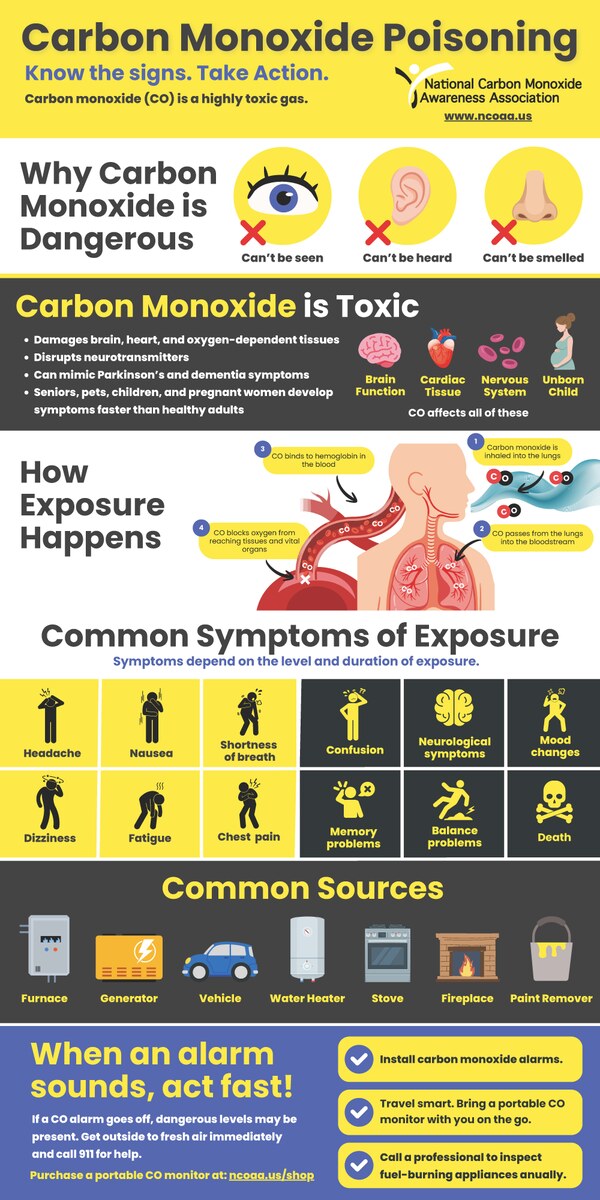
As life changes, so do routines, responsibilities, and potential CO risks. That’s why CO protection should be part of every stage. A baby can’t tell you they have a headache. A toddler may not have the words to explain that they feel dizzy, weak, or sick. Early symptoms of CO poisoning can look like the flu, making them easy to miss. That’s one reason working CO alarms are especially important in homes with young children.
Keeping little ones warm should never create a CO risk.
As temperatures drop:
• Never use a gas oven or range to heat your home.
• Never leave a vehicle running in an attached garage, even with the garage door open.
• If you use a portable generator, keep it outside at least 20 feet from the home with the exhaust facing away.
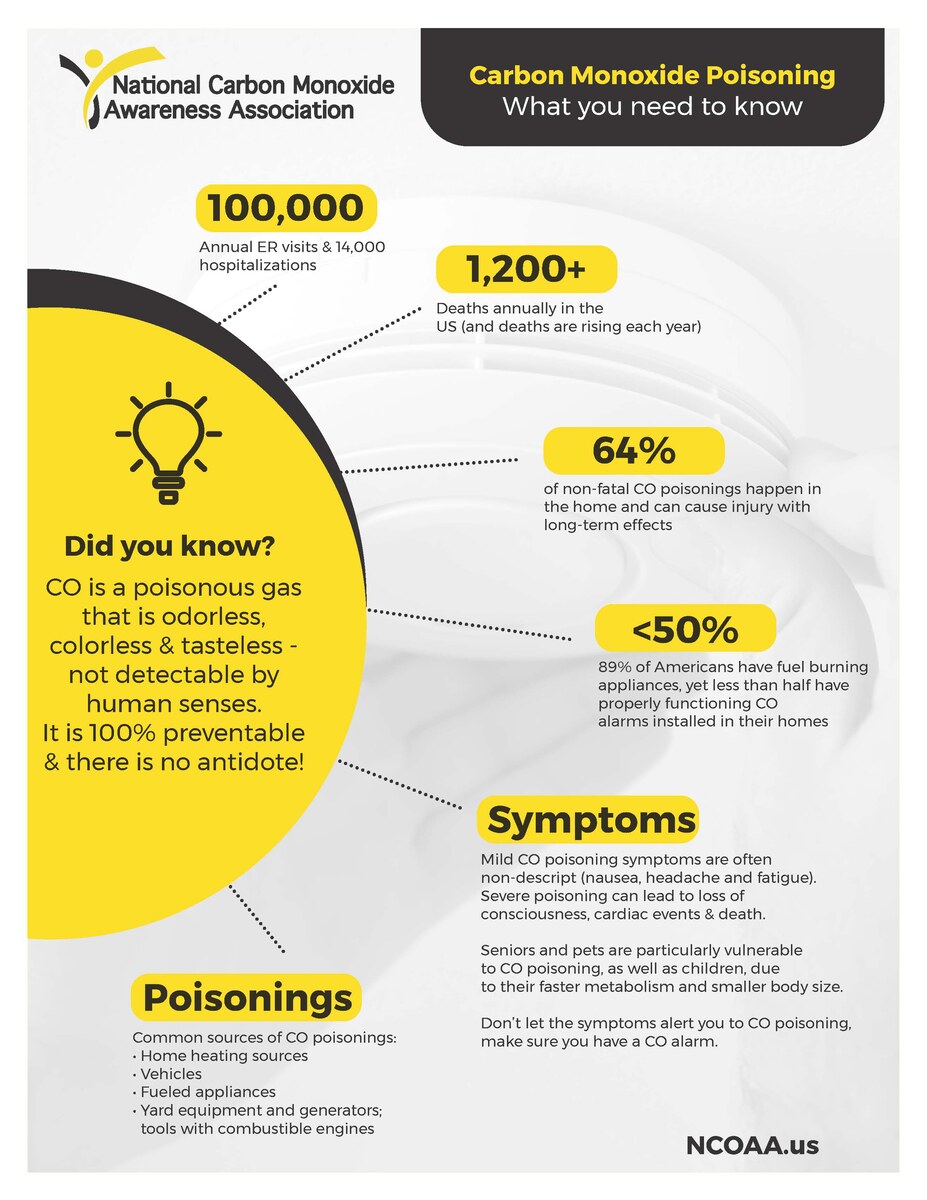
Babies and young children have smaller, developing bodies and higher metabolic rates than adults, which can make them more vulnerable to CO exposure. They may also be unable to explain when something feels wrong.
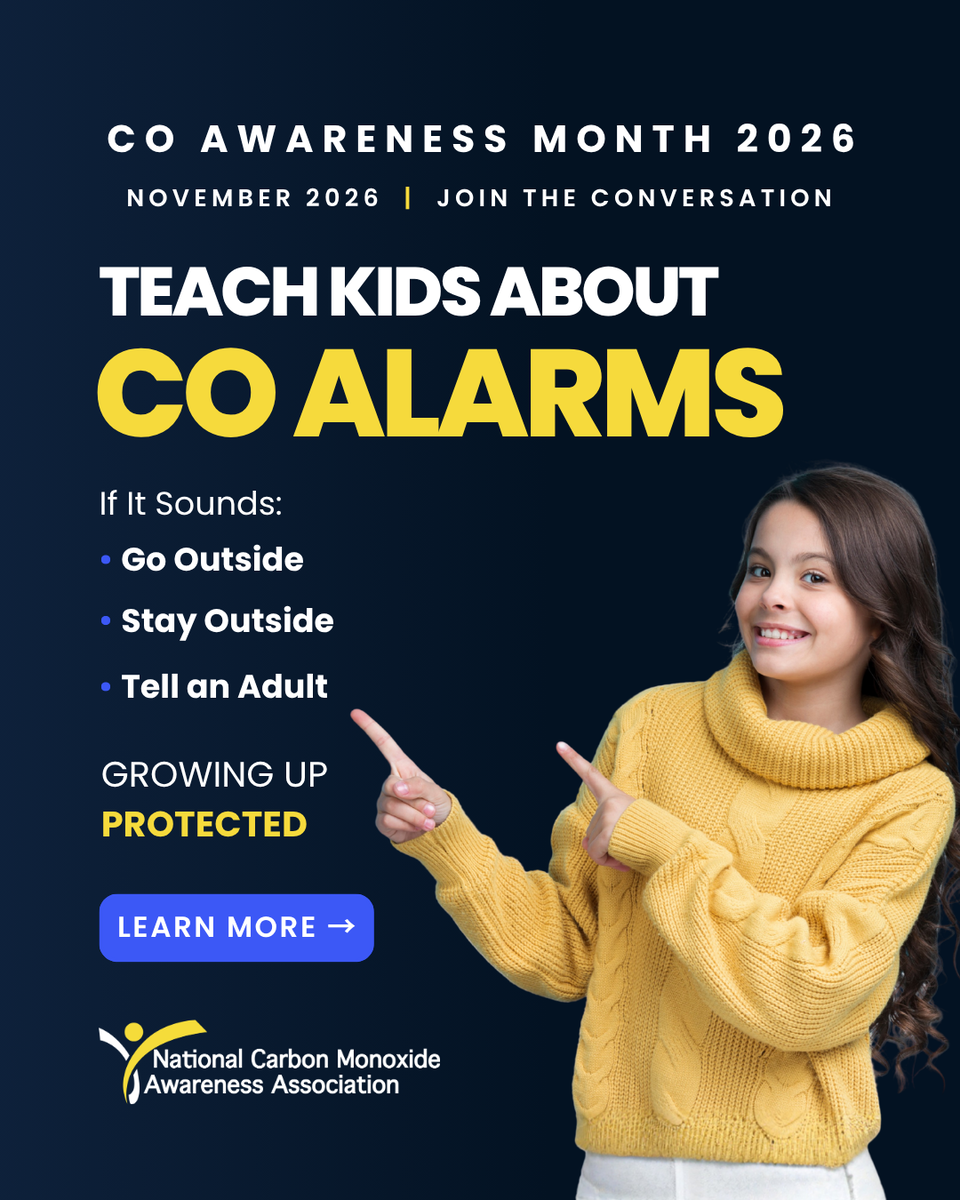
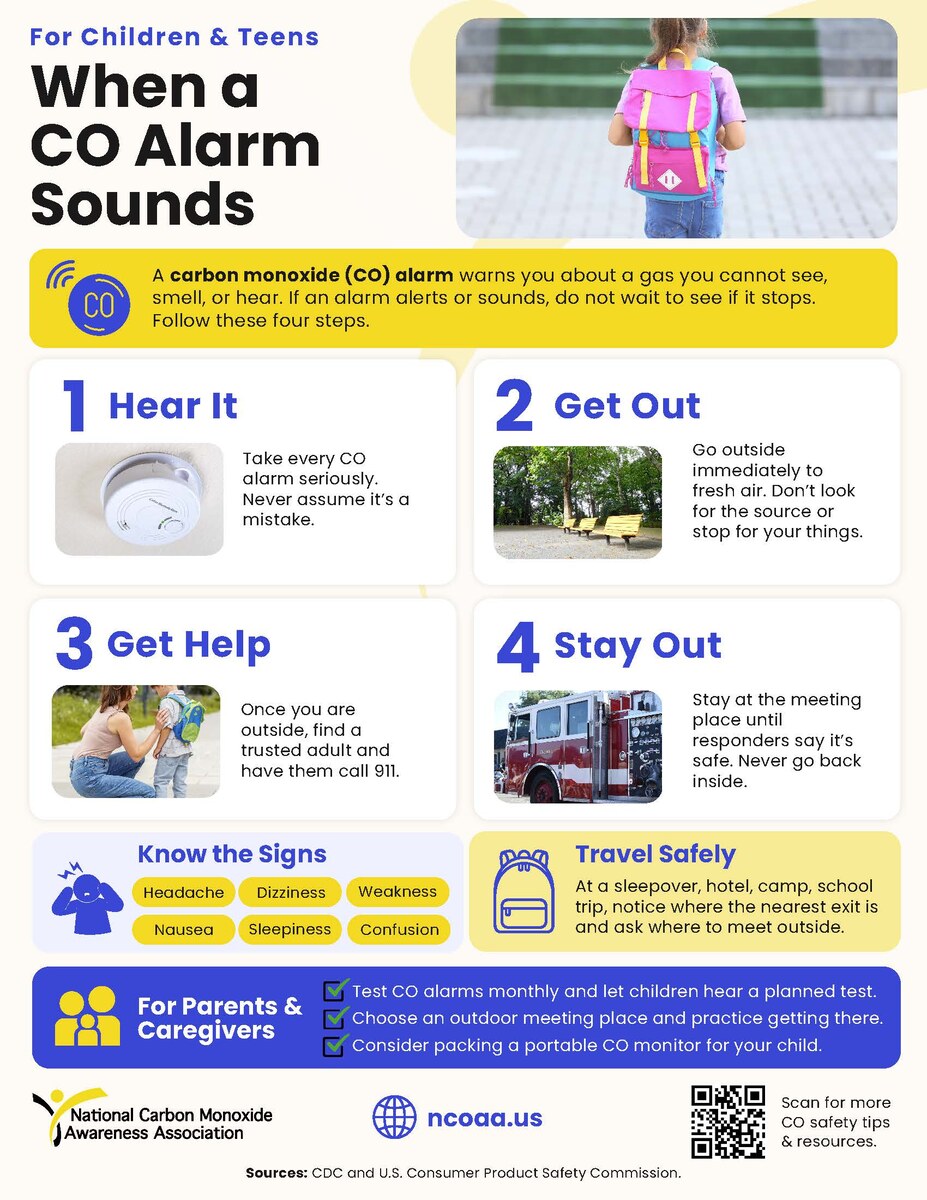
National Carbon Monoxide Awareness Association advises CO safety doesn’t have to be a scary conversation. You just have to keep it simple. Show children where the CO alarms are and let them hear the test sound. Explain that if an alarm sounds, they should go outside immediately, stay outside, and tell an adult. Once everyone is safely outside, call 911. Children should also know that a headache, dizziness, nausea, weakness, or confusion could be a warning sign, especially if other people nearby feel sick too. A short conversation now can help them know what to do when you’re not beside them.
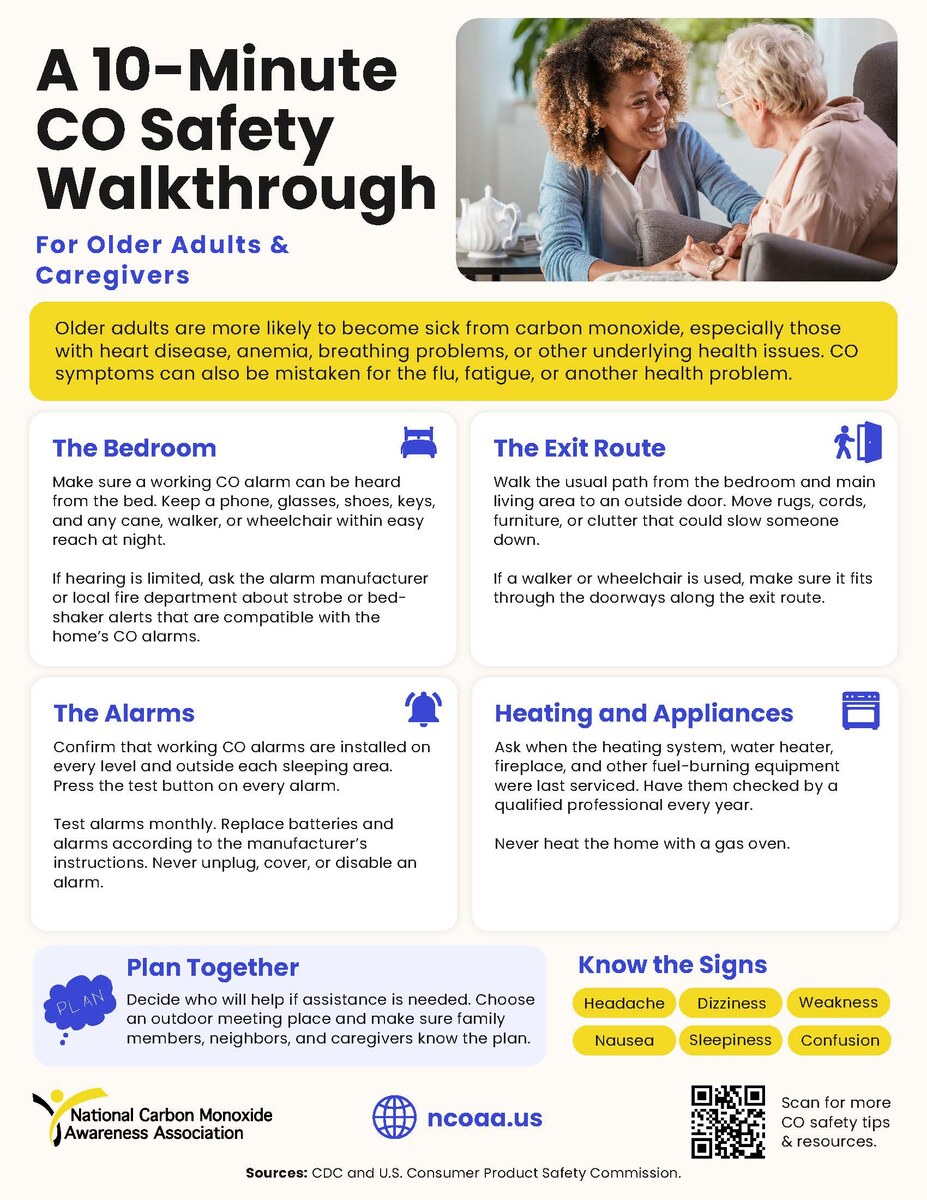
National Carbon Monoxide Awareness Association also reminds us to Protect the people who once protected you. As parents, grandparents, and neighbors grow older, they may need extra help testing alarms, checking replacement dates, maintaining equipment, or responding during an emergency. Family members, caregivers, neighbors, and senior-living professionals can all play a part. Make a difference in someone’s life. Explore CO safety at every stage.
**Last Safety Reminder** Several people are exposed to low levels of CO on a regular basis and do not realize it. Due to this, CO Poisoning can sometimes be misdiagnosed as Parkinsons.
For more information and resources, visit National Carbon Monoxide Awareness Association website linked below, as well as, their page for CO Awareness Month. |

 Add a Comment
